Monday, October 13, 2014

Defending the Faith: Mary Without Sin? Part 2: The New Eve

We continue the last part in our two part series on one of the longest fought issues out on the theological battlefield - is Mary sinless?

We tackled the All Argument that so many evangelicals tend to raise in Part 1. Today, we dig deeper into the Word and seek to discover if Mary is the culmination of what perfected grace should look like on Earth. And is it possible that God intended for her to be the perfected Eve - the New Eve.

The Evangelical Stance - Since we have seen numerous examples throughout the Bible that "all" does not always mean "all" in the absolute (and indeed, the original word used was more understood as "most" instead of the absolute "all"), we have identified exceptions to the "all". So we can discount Romans 3:10, 12, 23 as a justifiable argument. At this point, we must turn to the Word to see if any examples exist of Mary sinning. The evangelicals turn their sights on the wedding feast at Cana: "When the wine failed, the mother of Jesus said to him, 'They have no wine.' And Jesus said to her, 'O woman, what have you to do with me?' " (John 2:3-4)

It is the belief, in our day and culture, because of Jesus' use of the word "woman", we understand it to be used disparagingly - as if Mary had hurt or upset Jesus' plans thereby doing something contrary to Jesus - thereby sinning and making her imperfect, just like you or I.

The Counter Argument - To answer this argument most effectively. We have to look back and build up to it. And to do that, we must look to Biblical typology - the predictive relationship of the Old Testament to the New Testament, or, the line(s) of parallel we can directly trace between people, events, or symbols in the Old Testament to their fulfilment or likeness in the New Testament. One of the most glaring and black-and-white is found first in Genesis 3:14b, 15b - 
 
    "The Lord God said to the serpent...
'I will put enmity between you and the woman,
and between your seed and her seed;
he shall bruise your head,
and you shall bruise his heel.' "
 
 
This verse (v. 15) is known throughout most of Christian theologies as the protoevangelium - which is understood more clearly as the "seed of woman" concept which gives Messianic and Marian interpretations and typological parallels to Jesus and Mary.

The word "enmity" means 'not under dominion' - in the case of v. 15, apart completely from the serpent, who is Satan. We read on that "she" is not from Satan's seed - a total opposition from it. It is also important to note that before the Fall in Genesis 3, who we now know as Adam and Eve were never referred to as that. In their pre-Fall perfected state, they were known only as Man and Woman. It is not until after the Fall when sin enters into the Garden that God renames Man as "Adam" in v. 17 and Woman as "Eve" in v. 20. Woman is translated by theologians to be understood as perfection in a pre-fall condition. Because Eve only received that new name after the Fall, it can be concluded that the "woman" mentioned in v. 15 will be like the first Woman (who we know by her post-fall condition name, Eve) before the Fall who was crated by God in perfection. 

Now, why is that important to understand? Because of the Biblical typology used in John's gospel. The first point of typology John uses is his parallel to the Creation Story in Genesis. John 1:1 begins with the words, "In the beginning..." as does Genesis 1:1. John 1:4-5 describes the light coming into the world as does Genesis 1:3. John also describes the dove descending just as it is described in Genesis 8. The similarities to each creation day continues throughout the first chapter of John. Four days are mentioned in the first chapter, when the wedding feast at Cana happens in chapter two, verse one begins with, "On the third day...." Four plus three equals seven. Seven days of creation. Is this a coincidence accidentally made by John or was it a purposeful example of Biblical typology used by John to clue in his Jewish readers to reveal the beginning of the new Creation Story that was to begin again with Jesus Christ's coming? We assert that it is most certainly the latter and not the former. 

We see the typology occurring in Genesis 3:15 where the author identifies the conqueror from the seed of the woman, who should crush the serpent's head, is Christ. We now must ask who is the woman at enmity with the serpent that is Satan? John, because of his strong use of typology answers that question for us - with a little help from Luke.

John uses the parallels of the creation story in his opening chapter to show the parallel to his Jewish readers and the new creation story begins at the wedding feast. For as you had the old creation with the old Adam, you now have the new Adam who is identified typologically as Christ in 1 Corinthians 15:45, and following this typology, Christ calls Mary WOMAN. The exact word that is used in Genesis 3:15 to denote the perfection of the pre-fall condition. She is the new Eve. Jesus' seemingly (in today's culture) unapproving use of the word "woman" is meant not to berate but to distinguish her, as Luke does, as blessed among all other women. These are no more random coincidences that just magically parallel by happenstance than are the over 300 prophecies that Jesus himself fulfilled. These parallels, these examples are Biblical typology in action that point us to a deeper understanding of our faith.

As a post-script, how does Luke provide fodder for this assertion that Mary is without sin? In Luke 1:28, we read the angelic address of Mary given by Gabriel, "Hail, full of grace, the Lord is with you!" In today's world, that doesn't mean too much, other than giving honor. But in the original Greek, it means so, so, so very much more. For an angel to say "Hail" to a lowly human is a very, very big deal. In fact, no where else in the entire Bible is anyone addressed in this way except for Jesus Christ himself. Gabriel is addressing Mary with the highest form of royalty and honor possible - truly, on the same level as Christ Himself. Then he says something even more profound and unique in this one verse out of all the others in the entire Bible. Gabriel address Mary not as Mary but as, "full of grace."

Why is this important? The original Greek word for "full of grace" used here is kekaritomene. Luke choses not only this word but the conjugation carefully and deliberately. When we read "full of grace" we are reading the perfect passive participle, kekaritomene, as Luke's "name" for Mary. This word literally means "she who has been graced". But most importantly, because of the conjugation used it means that in a completed sense. "Full of grace" is not just describing a simple past action. There is actually an entirely different conjugated tense for that. The tense used by Luke is used to indicate that an action has been completed in the past resulting in a present state of being. "Full of grace" is Gabriel's name for Mary. So what does it tell us about Mary? It means she is different than most anyone who walks this earth because we know, according to Philippians 3:8-12, the average Christian is not completed in grace and in a permanent sense. But according to the angel Gabriel in Luke 1:28, Jesus Christ himself in John 2:4, and the writer of Genesis 3:15, MARY IS. As Christians though we try hard, we sin, and when we sin we have a lack of grace or cooperation with it. Grace simply cannot be complete in our lives because we sin. These three passages give us great insight into the unique character and calling of Mary. Only Mary is given the name "full of grace" and in the perfect tense, indicating that this permanent sinless state of Mary was completed.

 
Read Mary Without Sin? Part 1: The "All" Argument here.

Thursday, October 2, 2014

Defending the Faith: Mary Without Sin? Part 1: The "All" Argument

This next issue is one of the big ones that has been fought out on the theological battlefield for countless years...

The Evangelical Stance - There are two main verses that most all Protestants attack the belief that Mary was sinless with

  1. "...for all have sinned and fall short of the glory of God..." (Romans 3:23)
  2. "There is no one righteous, not even one...all have turned away..." (Romans 3:10, 12)
In our modern day culture, this in and of itself is very absolute. The word "all" is 100% inclusive in our English language...or at least that's what many Protestant theologians would want us to believe. When one takes that word and adds in "not even one" as extra theological ammunition, it seems pretty cut and dry. Every one on earth are sinners and fall short of God's glory. You can't get much more black and white than that.
 
Or can you?

The Counter Argument - The first problem that arises with the argument of an imperfect Mary are in the exact verses that claim that she was imperfect. What does that mean? Let's break down each verse:
  •  "...for all have sinned and fall short of the glory of God..." (Romans 3:23)

    • At first, this seems absolute - but we must ask ourselves, is it? Does all literally mean all in the absolute? Could this all include exceptions? And the answer is a resounding yes. How do we know? Firstly, it's common sense. If Paul means all (every single person on earth has sinned - and remember, Paul is only speaking of personal sin here ) have sinned, he believes that an 11 week old baby has sinned. He believes that a severely disabled person who is not in control of their decisions or faculties are sinful. He also believes that Jesus himself was a sinner.

      But is that what Paul means? Of course not. Can a baby that young sin? No. Can a severely disabled person sin? No. And here comes the wow factor - Christians believe that Jesus was 100% divine, yes. But he was also 100% human through and though. So per Paul's statement, that "all" would apply to Christ himself because of His 100% humanity. But of course we know that Jesus never sinned. So based on this, there are exceptions to Paul's "all".
      So knowing that there is one exception to the absolute "all", can there be others? Yes. Tons of them.
      • Matthew 3:5 speaking about John baptizing in the River Jordan says that, "Then went out to him Jerusalem and all Judea and all the region about the Jordan..." Did literally all the inhabitants of all three of those countries and regions come to be baptized by John? No of course not. He couldn't ker-plunk 'em fast enough. And certainly the Pharisees of those areas who were solidly against his teachings would never have shown up to be baptized.
      • In 1 Corinthians 15:22, Paul says that, "For as in Adam all die..." Does he literally mean all people die? No. Because we see in 2 Kings 2 and in Genesis 5:24 that, respectively, Elijah and Enoch both did not die but instead, we taken into heaven by God himself.
      • In Romans 11:26 we read that, "all Israel will be saved." Is this literal? Of course not. There are those in Israel then and now who denounced and do not believe in Christ. So again, we see major exceptions to the "All" Argument.
    And perhaps the biggest deconstruction of the "All" Argument is found in the original translation of Paul's letter to the Romans. Our English translates as "all" what the original Greek means as "most". And that, should put to bed the "All" Argument to bed once and for all as nothing more than a simple misunderstanding of a word that was used in Romans 3:23 and throughout other parts of the Bible as only a generic universality to stress a very important point.  

  •  "There is no one righteous, not even one...all have turned away..." (Romans 3:10, 12)
    • Again, we see Paul (though he is not using "all") using a style of generic universality for the purposes of proving his point. We can deconstruct this in the same way that we deconstructed the absoluteness of Romans 3:23. We can deconstruct it even more once we realize that Paul is actually quoting the Old Testament in this moment - Psalms 14:3 to be precise. This Psalm at is core is about the denunciation of Godlessness but it is written in the literary sense of universality and not absoluteness.
The question of, "Is Mary without sin", cannot be simply answered in once succinct blog post. It is much too in depth for that. So for today's post we have answered a very important foundational question that will pave the way to answering the ultimate question of her sinlessness - are there exceptions to the "All" Argument. And the answer, proven through multiple examples of Scripture is yes.

So if there are exceptions, could Mary actually be sinless. We will find out in Part II!

Wednesday, September 10, 2014

Defending the Faith: The Crucifix and the Cross

The next issue that this series will focus on is one that my brothers and sisters in the Church of God take contention with. And much like the "Father" title, this was an objection that I had no idea why or how it could be an objection. But apparently as I have discussed and studied this topic more, it does seem to be a growing objection. Now let's hope we can stem the growth before it becomes as prevalent as the "Father" objection.

The Evangelical Stance - This stance is more of a group of related contentious questions: Why keep Jesus on the cross when he has risen and defeated death? Why dwell so much on the cross, it's only half of the story? They go on to bolster their objects by citing Exodus 20:4 (the second commandment about graven images), John 4:24 (about worshipping in spirit and in truth), and by making the claim that since the cross was adopted as the official symbol of Christianity during the reign of Constantine (which occurred some 300 years after the death of Christ) and because the Bible does not say anything about the apostles or early Christians representing their faith by displaying crosses - then we should not do so either.

The Counter Argument - We'll start by taking the easiest points in this evangelical stance to correct and move on from there. Firstly, when it comes to the cross being adopted as the institutional symbol of Christianity hundreds of years after the death of Christ AND not expressly mentioned as the same in the Bible, we also should not look to it as the institutional symbol for our faith. This makes little sense. Why?
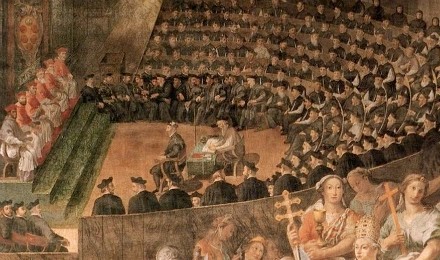
  • The Bible itself is not mentioned in the Bible. A strange assertion I realize, but follow me. Before the codification of the Bible as we know it today, there was no such thing as the Word of God to follow and obey as a practicing Christian. It was not until the early Christian leaders met at the Councils of Hippo (393 A.D.) and Carthage (397 A.D.) that the Bible was canonized and even more surprisingly, there was not even the definitive list that we know today, did not come from an Ecumenical Council until the Council of Trent (1545–63).
  • The concept of the Trinity, is never defined in the Bible and the exact word NEVER shows up. This belief was not officially adopted until the Council of Constantinople (360 A.D.)
  • The list continues but the purpose is clear - does any Christian church discount the belief in the Trinity or the authority of the Holy Scriptures? No. Of course not. One will also note that both of these iconic examples were adopted well after 300 A.D. See what I'm saying? You can't have it both ways. That option just isn't open to us.
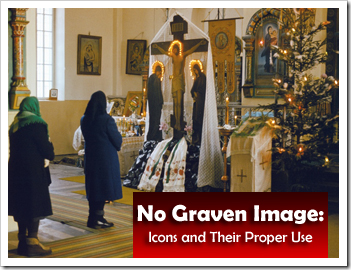
As far as the belief that the cross and crucifix are nothing more than graven images which are condemned by God as idolatries and that John 4:24 is the only true way to worship, we've already addressed that here in our installment about statues and icons. And, after breaking down those verses in that installment, if they held no theological weight then - when it comes to the crucifix and the cross, it certainly does not now.

Now comes the answering of the contentious questions posed at the beginning - Why keep Jesus on the cross when he has risen and defeated death? Why dwell so much on the cross, it's only half of the story?
________________________________________

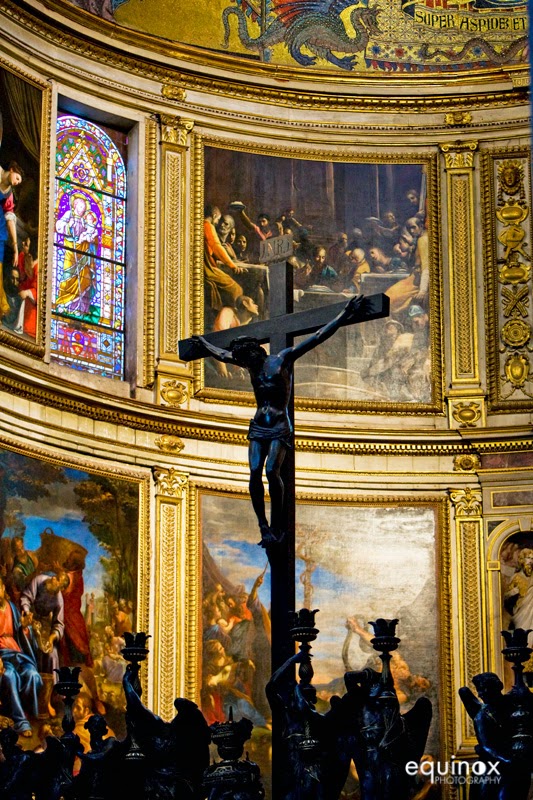
If we are put into a box and can only give Christ the glory in his resurrected state (as in, without a focus on the cross), then Christmas just got a lot more boring. Because if we can only look to the resurrected Jesus, are we not allowed to worship the Jesus that was in the manger? What about the Jesus that walked on water? Or the Jesus that healed the sick? We are called to worship without ceasing (1 Thessalonians 5:16-18) - not only to worship Jesus as our Risen Savior. All worship is important at all stages, but are there some worship stages that should be more elevated than others? If you ask an evangelical they will most likely say yes - the resurrected Christ. If you ask an Episcopalian or a Catholic they would also say yes - but they would say yes to the crucified Christ. So who's yes wins out? The one with the most substantial Biblical and theological support. And those who choose the crucified Christ would be theologically more correct.

In Revelation 5:6 we see Christ in his perfected state on the throne of Heaven with one very obvious attribute as it pertains to this argument, "Then I saw a Lamb, looking as if it had been slain, standing at the center of the throne, encircled by the four living creatures and the elders." He is seen not as the resurrected Christ, but the slain Lamb.

Looking at what the original church fathers believed - those in authority closest to Christ - can give us all the most accurate view on our Christian beliefs. We can look to Paul's writings to see what the original Christians viewed as most important (not only as far as this issue goes, but most all issues of theological importance). In Romans 6:3-8, Paul emphasizes the importance of the death and crucifixion of Christ and not his resurrection: "For we know that our old self was crucified with him so that the body ruled by sin might be done away with,  that we should no longer be slaves to sin - because anyone who has died has been set free from sin. Now if we died with Christ, we believe that we will also live with him." Later, in 1 Corinthians 1:23, we hear him say that, "we preach Christ crucified" not Christ resurrected. And what is the best way to fulfill what Paul is asserting here? Through the visible presence of the cross and the crucifix. Because like a sacrament, the cross and crucifix are visible symbols of an invisible grace. Paul goes on to say that we should not, "know any thing among you, save Jesus Christ, and him crucified. (1 Corinthians 2:1-2)" When Paul writes to the Galatians, he says that they must glory only, "in the cross of our Lord Jesus Christ. (Galatians 6:14)"

It is important for me to make sure that this is understood however - I am not saying that the resurrection is in any way unimportant or not paramount to our faith . It surely is. So much so that Paul also says, "And if Christ has not been raised, your faith is futile; you are still in your sins. (1 Corinthians 15:17)" There must be a healthy balance. And how do we get that? We first must understand as the early church did, that our emphasis must first be on Christ crucified. If it is not, we can never fully understand or appreciate the resurrection - because there can be no Easter Sunday without a Good Friday. The crucifixion won us redemption and allowed us to be put back right with God as a whole. Then, through the resurrection, we receive new life in Christ - but ONLY because it was afforded to us THROUGH the crucifixion. It is a matter of both/and not either/or. It is through the Eucharist, celebrated every day throughout the world, that Calvary becomes present - with Jesus on the cross and not off it.

Tuesday, September 9, 2014

Defending the Faith: The 'Father' Title

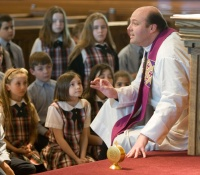
Today's post is up there with one of the most common objections of the Episcopal and Catholic denominations I come across. When I first heard the objection I was so stunned that it would even be an issue I had absolutely no ammunition to back up why we use the title in question. That soon changed however...


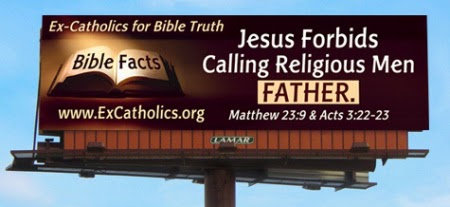
The Evangelical Stance - Those denominations that call their priests or preachers "Father" are directly disobeying the commandment of Jesus Christ Himself when He says, "And call no man your father on earth, for you have one Father, who is in heaven. (Matthew 23-9)" I have lost track of the times I have heard this argument - especially, it seems, from Church of God, Primitive Baptists, and many non-denominational members.

The Counter Argument - Is Jesus prohibiting the use of the word "father" as a religious title? In a word, NO. And the evidence to refute that claim made by the evangelicals is so numerous, it's scary.
  • Acts 7:2, "And he said, Men, brethren, and fathers, hearken; The God of glory appeared unto our father Abraham, when he was in Mesopotamia, before he dwelt in Charran..."
  • Luke 16:24, "And he cried and said, Father Abraham, have mercy on me, and send Lazarus, that he may dip the tip of his finger in water, and cool my tongue; for I am tormented in this flame."
  • Romans 4:12, "And the father of circumcision to them who are not of the circumcision only, but who also walk in the steps of that faith of our father Abraham, which he had being yet uncircumcised."
  • Romans 9:10, "And not only this; but when Rebecca also had conceived by one, even by our father Isaac..."
  • John 4:12, "Art thou greater than our father Jacob, which gave us the well, and drank thereof himself, and his children, and his cattle?"
  • Acts 4:25, "You said through the Holy Spirit, by the mouth of our father David Your servant: Why did the Gentiles rage and the peoples plot futile things?"
You get the idea. But it doesn't stop there - in the same Acts 7:2 quoted above, the "fathers" made mention of are the religious Jewish elders. In 1 Corinthians 4:15-16, Paul calls himself Father. With this massive amount positive evidence in contrast to the evangelical argument against it, we can take this even farther. In the two verses that sandwich Matthew 23:9, (Matthew 23:8,10) we read, "But you are not to be called ‘rabbi,’ [which means teacher] for you have one Teacher, and you are all brothers....Nor are you to be called instructors, for you have one Instructor, the Messiah." Again, is Jesus prohibiting the use of the words teacher and instructor as a religious title? And again, NO. The evidence for this is also there -
  • 1 Timothy 2:7, "And for this purpose I was appointed a herald and an apostle—I am telling the truth, I am not lying—and a true and faithful teacher of the Gentiles."
  • 1 Corinthians 12:28, "And God has placed in the church first of all apostles, second prophets, third teachers, then miracles, then gifts of healing, of helping, of guidance, and of different kinds of tongues."
  • James 3:1, "Not many of you should become teachers, my fellow believers, because you know that we who teach will be judged more strictly."
One never hears these verses quoted with the regularity of Matthew 23:9 and there's reason for that - if we believe Matthew 23:9, we must also believe vv.8, 10. And if we must believe vv. 8,10 - we can kiss the organized church system goodbye because all pastors, lay leaders, Sunday School teachers, VBS instructors, and seminary professors will have to look for other avenues of work. It doesn't make sense. Because if Jesus is saying look only to Him and there should be no other teachers or instructors of the faith, why would Christ Himself appoint teachers to carry on his cause? Why would Peter call himself a teacher? Why would James explain the merits and hardships of being a teacher and an instructor for Christ? The evangelicals' argument has cracked and simply cannot hold water.
___________________________________

So what does Christ mean by this commandment he sets down in Matthew 23:8-10? Christ uses hyperbole in these instances to emphasize the equality of God's people which the Pharisee's had lost sight of. And before you start to question the use of hyperbole in the Bible - this isn't the only time Jesus uses it. Look at Luke 14:26, "If anyone comes to me and does not hate father and mother, wife and children, brothers and sisters—yes, even their own life—such a person cannot be my disciple." Is Jesus actually telling us that the only way we can be His disciple is to hate our family, our children, and our very life? No, of course not. That's why it's called hyperbole - an exaggeration that is used to evoke strong feelings or to create a strong impression, but is not meant to be taken literally. Another example of hyperbole is Romans 9:13, "Jacob I loved, but Esau I hated." Obviously, Christ hates no one because God is love and cannot exist with hate (1 John 4:8) so he cannot love Jacob and turn around and hate Esau. These are not even close to covering all the hyperbole examples inside Scripture, but enough so that people may understand what is occurring in Matthew 23:9.

In a nutshell, it comes down to a word - putting this verse in CONTEXT. Most evangelicals forget to do just this and only read what they perceive a verse to be on it's face value. And any true theologian will tell you - context is the name of the game when it comes to proper and responsible biblical interpretation. So let's zoom out and stop looking at Matthew 23:9 alone and focus on the full context of Jesus' words. Matthew 23 begins with Jesus talking to the crowd about the Pharisees. He accuses them of being hypocrites. He also makes a point to say that they, "love to be greeted with respect in the marketplaces and to be called ‘Rabbi’ by others." THEN comes vv. 8-10. Jesus is admonishing the Pharisee's hypocritical nature and their love of honorific titles and uses vv. 8-10 hyperbolically to emphasize that fact. That's the verse in context. That's what really is going on and it has nothing to do with me addressing my priest as "Father" or me referring to my Sunday School leader as my teacher.


Click here for Defending the Faith: Repetitious Prayer
Click here for Defending the Faith: Statues and Icons

Monday, September 8, 2014

Defending the Faith: Repetitious Prayer

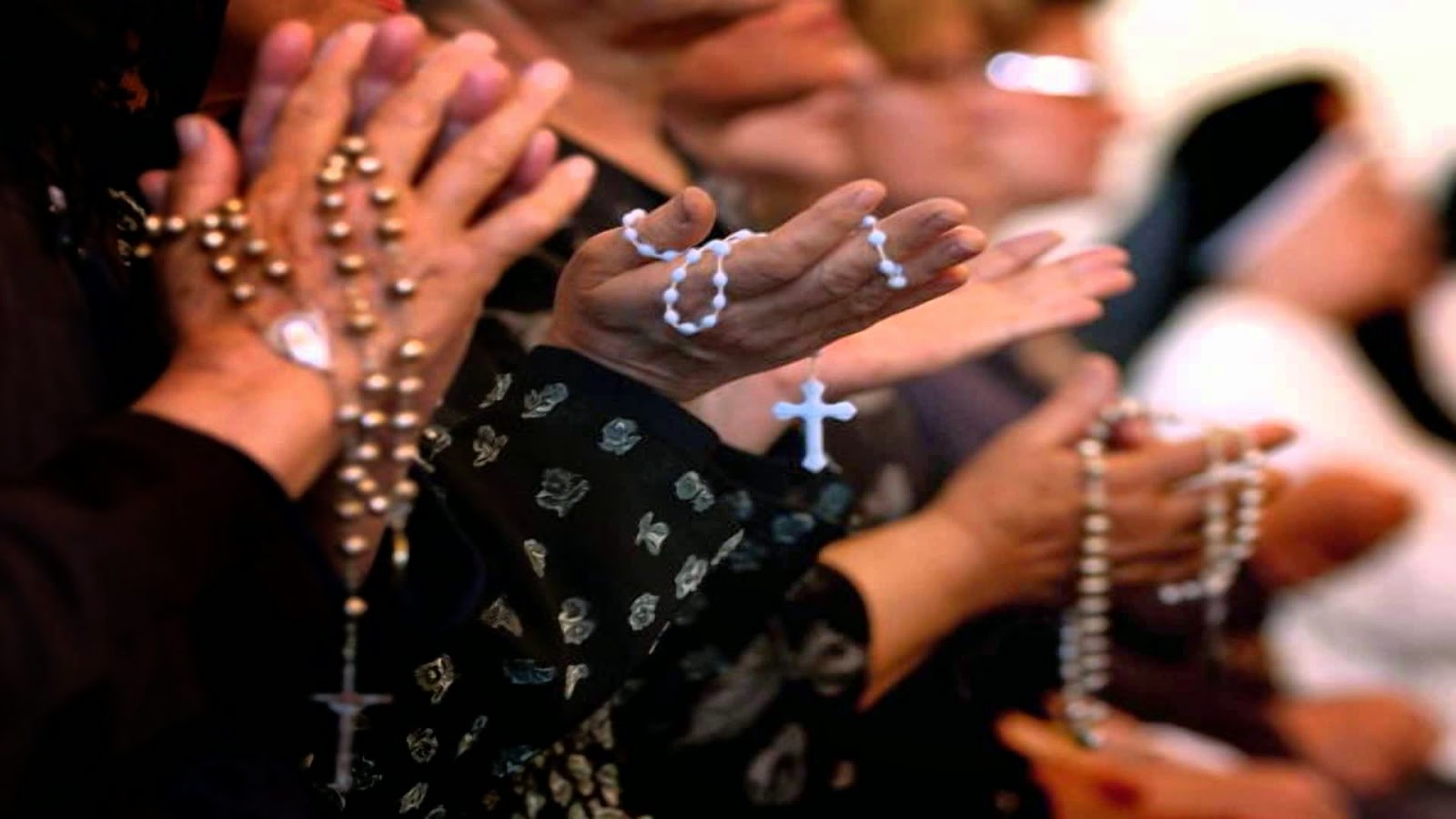
We continue our defense of the Episcopalian and Catholic denominations of Christianity by looking at another argument we can hopefully be able to finally put to rest at the end of this post - repetitious prayer (specifically the type of prayers used in the Rosary and the Jesus Prayer).

The Evangelical Stance - Many evangelicals will condemn repetitive prayers (to say nothing of who the Rosary is seemingly built around) because of Matthew 6:7 which states, "But when ye pray, use not vain repetitions, as the heathen do: for they think that they shall be heard for their much speaking."

The Counter Argument - The first question that must be asked is, was Jesus ever in the habit of condemning Himself? A strange question with a very obvious answer - No. Absolutely not. So why ask this question in the first place? Because Jesus, for all his Messianic-ship, was a devoted Jew who devotedly followed the Jewish customs. One of these being, meditating upon the Psalms daily - in particular, Psalm 136. There's probably not a more repetitious prayer-Psalm in the entire Bible - 26 times we read, "for his mercy endureth for ever", "O give thanks" 4 times, and the "To Him" exhortation 8 times. As a devoutly practicing Jew, Jesus would have prayed through the Psalm on a weekly, if not daily basis. Even when faced with his certain death, Christ prays in the Garden of Gethsemane in a repetitive fashion, as is noted in Matthew 26:39-44 where he prays to his Father to "let this cup pass" 3 times. So is Jesus condemning something He Himself does?

In heaven, we are told in Revelations 4:8 that the angels rejoice in prayer without ceasing three words - " Holy, Holy, Holy". It is important to note that these can be identified as the exact same angels who repeated this exhortation to Isaiah - identifying this repetitive exhortation had been going on incessantly since at least the time of Isaiah up until the writing of Revelation, some 700 years. There is little doubt that their repetitive exhortation of prayer stopped after Revelation - so it can be safely surmised that it continues to this day and will continue in the future. Would Jesus condemn his own perfect kingdom and angels in heaven for thousands of years of praying this repetitive exhortation? No. Of course not. There's more to this story ...
___________________________________

So what then is Matthew 6:7 talking about? To start with, the best translation of this verse is NOT the King James Version because in it's translation (it was used in the beginning because it is the standard translation many Evangelicals turn to), it looses the meaning of the original words used in Matthew's writings. A closer translation to Matthew's original words can be found using the NIV or ESV (to name only a couple) that translate the original more specifically using the words "babbling" and "empty phrases". Why is this distinction important? Because in the culture of the Gentiles of this time in history, their daily life and conduct had no connection to their sacrificial systems and prayer lives. This is why Matthew uses the choice words that is most accurately translated as "babbling" or "empty phrases" and not "repetitious prayer". The 'prayers' of Gentiles were traditionally a jumble of words which we void of meaning, value, truth, and love.

To make the distinction even more concrete, Matthew 15:7-9 says, "This people honors me with their lips, but their heart is far from me; in vain do they worship me, teaching as doctrines the commandments of men." To put it more succinctly, if there's honor with your speech but not your heart, then your worship doesn't matter and is in vain. Christ is not condemning repetitious prayer (obviously not or He would be guilty of what He Himself was condemning) but babbling, empty prayer that is empty and devoid of love, worship, and truth that comes from the heart of a person in love with their Creator. 

That is why repetitive prayers like the Rosary and Jesus Prayer must be animated with and by love alone. We are called to meditate on God's word night and day and these types of repetitious prayers provide us with an option do just that on a convenient rope. Every single phrase in these repetitious prayers have their birth and creation rooted in the words in Holy Scripture and the love that springs from them. And this is where all our prayer lives should originate from - repetitive or not. And I'm not just babbling about that, either.


Click here for Defending the Faith: Statues and Icons. 

Monday, September 1, 2014

Defending the Faith: Statues and Icons

I have decided to take on a series of blog posts devoted to answering a selection of the criticisms and objections that some Christians take with the Episcopalian and Catholic stances on certain theological issues. As we go through these issues, note that I love all my evangelical, Bible-believing brothers and sisters immensely (even if, in certain instances, they are off a bit theologically) - and I'll never talk badly about them.

So why do this? For two main reasons:

1. We are commanded in Proverbs to study our faith and grow in knowledge - "Let the wise hear and increase in learning, and the one who understands obtain guidance." (Proverbs 1:5)

2. We are called by Peter to, "always being prepared to make a defense to anyone who asks you for a reason for the hope that is in you; yet do it with gentleness and respect, having a good conscience..."

Knowing this then, it is important to put aside preconceptions about things you've heard through the grapevine, rumors, and/or blissful ignorance and crack open the Bible with a heart of contextual openness instead of bias. With that being said, let's move to the first common misconception.
____________________________

The Evangelical Stance - Catholics (and some Episcopalians) have statues of people like Jesus, Mary, Joseph, and other saints long dead in their church and they bow before them, worship them, and pray to them. This is completely against the Ten Commandments, because the second commandment states, "You shall not make for yourself a graven image, or any likeness of anything that is in heaven above, or that is in the earth beneath, or that is in the water under the earth." (Ex. 20:4) 


The Counter Argument - The first question that must be asked is simple: Can God get confused? ..... Of course, the answer is a resounding NO. Why ask that question? For this reason - if God is condemning absolutely the making of images and statues, then what other reason besides confusion (and possibly forgetfulness) would God have for commanding statues and images to be made? But God is not confused. And he certainly is not forgetful. So there must be more to this issue than meets the eye.

Just five chapters later in Exodus 25:18-22 one who reads the second commandment in an absolute sense will be met with a major obstacle to their argument - God commands statues and images to be made to go on top of the Ark of the Covenant. But if God is against all carved images, why is he instructing them to be made? Cherubim, which are angels, are from heaven and are heavenly beings. Doesn't this fly in the face of the second commandment? One can also look to 1 Kings 6:23 (where God commands and blesses Solomon for filling the temple with statues and engraved figures and images), Numbers 21:8-9 (where God commands Moses to build a bronze serpent attached to a pole that had healing powers), and 1 Kings 6:29 (where King Solomon replicates through images and engraving the original Garden of Eden in the middle of his temple) which really seems to put God at odds with his own second commandment. But can that be?

What then is God talking about in Exodus? He is prohibiting acts of natural idolatry. The word "graven" in Hebrew refers only to a very specific type of image - one made out of only stone or wood solely made to be worshipped. And in the culture of Moses, only the pagans practiced these types of graven idol worship. So God is speaking in a specific way for a specific culture in terms that they would understand immediately. God is prohibiting the worship of false pagan gods made out of these natural materials.

At this point, from an academic standpoint, it should be reasoned without question that Catholics and Episcopalians are not guilty of idolatry because the statues and images in their churches are not false gods diametrically opposed to Christ himself, but are in fact aids that propel us deeper in our relationship with Christ.

But even with that, some evangelists will counter the academic evidence with John 4:24 saying that these "aids" are still idolatrous because we, "must worship in spirit and truth." Again, the question must be, is Jesus confused or forgetful? The answer is still no. Evangelists would like to pigeonhole us into believing that John 4:24 must be in direct opposition to anything material. But not only does it not say or imply that, but there are many examples in the Bible that show worshipping in in the material sense is just as acceptable as worshipping in spirit and truth. We see the many examples in Solomon's temple (commanded and blessed by God himself) that refutes that claim. But we also can look to Numbers 15:38-39 where God commands his priests to wear special tassels so that their parishioners can, "look at and remember all the commandments of the Lord, to do them..." and in Genesis 9:13 where God uses the rainbow to create a materialistic sign of his invisible covenant with his chosen people. John 4:24 is not an either/or commandment. It is a both/and.

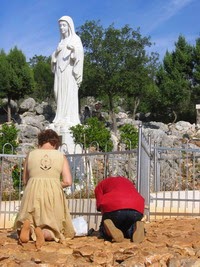
And yes, we do bow down in front of statues. But is this idolatry? Absolutely not. In 1 Kings 2:19, King Solomon bows down to his mother when she enters in King's court. Is he worshipping her? No. He is showing her honor. The posture of bowing simply doesn't always denote worship and adoration. When a man proposes to his hopeful bride, he bows down before her on one knee. Is he worshipping her? No. He is showing her his honor and respect.

Most evangelists who are quick to dismiss this practice of the veneration of images and statues in the Catholic and Episcopal church as outright idolatry, easily forget the images in their own stained glass windows, the Bible picture books and coloring books used in Sunday School classes, the live nativities and crèche scenes that are so abundant in their churches during the Christmas season, and the countless paintings of Christ himself that adorn so many pastors' studies and church hallways. If they absolutely believed Exodus 20:4, then they also are equally guilty of outright idolatry.

But here's the bottom line: in churches that understand the importance and the biblical precedence of incorporating material worship aids like statues, icons, and other sacred imagery into their church experience to get closer to Christ, they honor and show affection not for these images themselves but what they represent. And there is nothing idolatrous about that.

Wednesday, April 23, 2014

easter day

 
Jubilate Deo! ALLELUIA! Shout with Joy to God, ALLELUIA!
 
 
The church was packed to capacity, decked out in all its glorious Easter Day splendor, the huge ornate organ bellowed out the familiar Easter strains of "Welcome, happy morning", the bells pealed, the special string ensemble added even more beauty to the majestic organ music, the combined choirs (Junior and Senior Choristers and the Trinity Choir) wafted through the sanctuary from up above where they performed in their balcony section, and the opening acclamation resounded through the sanctuary upwards into the huge wooden rafters -
 
ALLELUIA! Christ is risen. The Lord is risen indeed. ALLELUIA!
 
The Trinity Choir practices before the start of the Easter Day worship

 O God, who for our redemption gave your only-begotten Son to the death of the cross, and by his glorious resurrection delivered us from the power of our enemy: Grant us so to die daily to sin, that we may evermore live with him in the joy of his resurrection; through Jesus Christ your Son our Lord, who lives and reigns with you and the Holy Spirit, one God, now and for ever. Amen.

 
The Holy Gospel of our Lord Jesus Christ according to John _______
 
"Now on the first day of the week Mary Magdalene came to the tomb early, while it was still dark, and saw that the stone had been taken away from the tomb. So she ran and went to Simon Peter and the other disciple, the one whom Jesus loved, and said to them, 'They have taken the Lord out of the tomb, and we do not know where they have laid him.' So Peter went out with the other disciple, and they were going toward the tomb. Both of them were running together, but the other disciple outran Peter and reached the tomb first. And stooping to look in, he saw the linen cloths lying there, but he did not go in. Then Simon Peter came, following him, and went into the tomb. He saw the linen cloths lying there, and the face cloth, which had been on Jesus' head, not lying with the linen cloths but folded up in a place by itself. Then the other disciple, who had reached the tomb first, also went in, and he saw and believed; or as yet they did not understand the Scripture, that he must rise from the dead. Then the disciples went back to their homes. But Mary stood weeping outside the tomb, and as she wept she stooped to look into the tomb. And she saw two angels in white, sitting where the body of Jesus had lain, one at the head and one at the feet. They said to her, 'Woman, why are you weeping?' She said to them, They have taken away my Lord, and I do not know where they have laid him.' Having said this, she turned around and saw Jesus standing, but she did not know that it was Jesus. Jesus said to her, 'Woman, why are you weeping? Whom are you seeking?' Supposing him to be the gardener, she said to him, 'Sir, if you have carried him away, tell me where you have laid him, and I will take him away.' Jesus said to her, 'Mary.' She turned and said to him in Aramaic, 'Rabboni!' (which means Teacher). Jesus said to her, 'Do not cling to me, for I have not yet ascended to the Father; but go to my brothers and say to them, ‘I am ascending to my Father and your Father, to my God and your God.' ' Mary Magdalene went and announced to the disciples, 'I have seen the Lord'—and that he had said these things to her.

____________________________

The Easter Day Sermon - delivered by the Rev. Dr. Paul S. Nancarrow _____
Click here to listen to an audio version of this sermon. 
 
Mary turned around and saw Jesus standing there, but she did not know that it was Jesus. Jesus said to her, “Woman, why are you weeping? Whom are you looking for?” 

In that moment, standing outside an empty tomb in the first light of a new morning, Mary’s entire life changed. In that moment her grief was answered, in that moment her sorrow was healed, in that moment her life became opened to a larger life.

But Mary didn’t know that yet. Jesus was risen and all life was changed, but Mary didn’t recognize him yet, Mary didn’t know it was Jesus, Mary couldn’t see who it was that was asking her not to weep.

What was it that prevented Mary from recognizing Jesus, Jesus standing there, Jesus standing there alive beyond the grave? I think the first reason Mary couldn’t see him was because she was weeping, her eyes were full of tears, and those tears literally blurred her vision, clouded what she could see, so that she couldn’t make out the face of the one talking to her. Mary’s perception was so altered by her grief that she literally could not see the Risen One who was right in front of her eyes.

But I think Mary’s inability to recognize Jesus was not just physiological: I think it was psychological as well. Mary couldn’t recognize Jesus because she knew it couldn’t possibly be Jesus talking to her. She knew Jesus was dead, she knew Jesus was gone, she knew the body had been taken – and all these things she thought she knew kept her from seeing the truth that was really there. The truth was that Jesus was risen, the truth was that the power of death had been broken, the truth was that there was more to life beyond the life she knew – but she could not recognize that truth as long as her old expectations still limited what she would allow herself to know. Mary was prevented from recognizing Jesus speaking to her because there was no place in her psyche for that new, unexpected, astonishing truth to connect.

In a moment, Mary’s entire life changed; and yet, for a moment, she did not recognize the reality the Risen One was offering her.

And I wonder how often we are like Mary in that moment. How often are we prevented from recognizing the presence of Jesus with us, how often do we not know the new life the Risen One is offering to us? How often do we let old tears, old griefs, old hurts, old expectations, alter our perceptions and get in the way of knowing the living Jesus inviting us not to weep?

Once I heard a woman speaking about the consequences of child sexual abuse she had survived in her teen years. She told us the pain and shame and anger from that abusive relationship stayed with her for years, clouding and distorting all her relationships, making it difficult for her to trust anyone who seemed to her to be in power, making it difficult for her to feel truly close, truly intimate, with anyone at all. She said that, because of that abuse, she knew, she absolutely knew she was not worthy of being loved – and that expectation about herself made it impossible for her to let herself be loved for many years. Even when the possibility for genuine love was right there in front of her, for a long time she couldn’t recognize it.

I knew a family many years ago whose newborn baby daughter was diagnosed with a cancer in her stomach. They sought the best medical treatment, and they had lots of support from their family and their church, and they prayed and they prayed for God’s healing power. But their daughter died – and in their pain and their grief they were angry at God, but their church had always taught them that everything happened according to God’s will, and God’s will was always for the best, and being angry at God for anything really was a sin. So all that anger had no place to go, and instead it turned inward. That family continued to go to church, and go through the motions of church life; but their hearts weren’t in it, it had no meaning for them, and their church connections began to get frayed, and no one from their church ever told them that it was okay to be angry with God, that the Bible is full of people who are angry with God, and that God grieved their daughter’s death with them, and God wanted nothing more than to hold their hearts in love and help them find the strength to start their lives anew. Even when the possibility for genuine life was right there in front of them, for a long time them couldn’t recognize it.

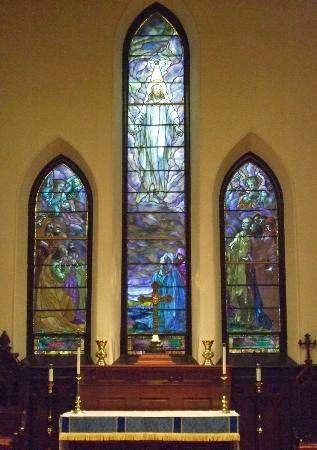
The Easter Morn Achangel
Gabriel is part of a pair of Easter
Morn windows in Trinity. Tiffany
Studios, N.Y.

And how often are we prevented from recognizing the presence of Jesus with us? How often do we let old tears, old griefs, old hurts, old expectations, alter our perceptions and get in the way of our knowing the living Jesus inviting us not to weep?

Of course, in the story Mary is not left in that moment of unrecognition for very long. For a moment she fails to see that it is Jesus speaking to her. But then Jesus calls her by name – and in that moment of personal contact, in that moment of personal connection, in that moment of personal communion, then she knows him, then she knows that it is Jesus, then she knows that the tomb is empty not because the body has been stolen, but the tomb is empty because Jesus has broken the power of death, because Jesus has overcome the terror of the grave, because Jesus has passed through pain and suffering and sorrow and loss and has taken them up into a life that is larger than they are, a life that is so full of the love of God that nothing, nothing, not even death, can hold that life down. And recognizing Jesus as the Risen One, Mary knows that her life, too, is raised; her life, too, is caught up into a life that is larger than herself; her life, too, is brimming with new possibilities for living in the power of God’s love.

And I think we can be like Mary in that way, too. We know the reality of resurrection when it touches us in a personal way, when it engages us in a personal communion. Resurrection is just a Bible story, resurrection is just a church doctrine – until it calls us by name, until we have the experience of recognizing the living Christ present in our lives, sharing his eternal love with us.

The survivor of sexual abuse found that with great patience, and good therapy, and hard work, and the willingness to trust someone who really did love her, her life was turned around, her pain and shame no longer had power over her, she learned how to love – and that was recognizing resurrection.

The parents grieving their daughter found someone who told them it was okay to be angry with God, God was big enough to take it, and God promised no easy answers but God did promise light at the end of the tunnel, God did promise joy on the far side of grief. And bit by bit, step by step, they did their grieving work, and they rediscovered joy, and their family began to grow – and that was recognizing resurrection.

And how does that personal connection with resurrection touch you? How does the Risen One stand beside you in your life, and call you by name right now? Where in your life does grief find itself beginning to give way to joy? Where in you does fear begin to get caught up into courage? Where does confusion become decision? Where do things you already “know” open up into truths that are larger than you had imagined? Where does despair open up into hope? Where do you find yourself brimming with new possibilities for living your life in the power of God’s love? That also is recognizing resurrection.

Mary stood outside the tomb, weeping, her vision blurred by tears – until the Risen Jesus called her by name and helped her see through her tears and touched her with new life. Here, today, in this Easter celebration, Jesus calls you by name, Jesus wipes away your tears, Jesus touches you with new life. Let it be our Easter prayer that we may rejoice in this new life always. Amen. Alleluia!
____________________________
 
The service ended after all its majesty, pomp, and circumstance with one of the most anticipated organ voluntaries of the year - Charles Marie Widor's Toccata from Symphony 5.
 
Included below is the final two minutes of this amazing, extremely demanding and challenging piece.